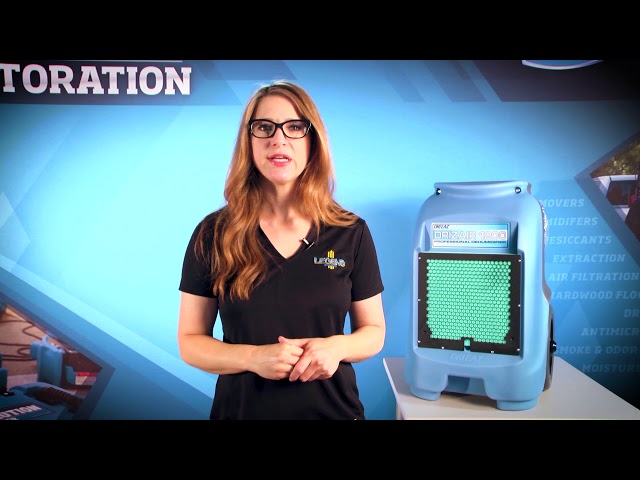


When excess humidity takes over your home — whether from a flood, a burst pipe, or a damp basement — the right equipment makes all the difference. The Dri-Eaz Drizair 1200 Dehumidifier is one of the most trusted machines in water damage restoration, and for good reason. It pulls massive amounts of moisture out of the air quickly, helping you protect your home’s structure, your belongings, and your health. This guide breaks down exactly what makes the Drizair 1200 worth considering, how it works, when to use it, and how to get the most out of a rental.
Table of Contents
- What Is the Dri-Eaz Drizair 1200?
- How Does It Work?
- Key Specs and Features
- The Real Benefits of the Drizair 1200
- When Should You Use One?
- Signs Your Home Has a Humidity Problem
- Renting vs. Buying: Which Makes More Sense?
- Tips for Getting the Best Results
- Frequently Asked Questions
Key Takeaways
- The Drizair 1200 removes up to 27 gallons (103 litres) of water per day — far more than a standard home dehumidifier.
- It’s designed for water damage restoration, not just comfort — it handles extreme humidity conditions.
- Renting is the smart choice for one-time events like floods or pipe bursts.
- Proper placement and airflow matter as much as the machine itself.
- The ideal indoor humidity level is 30–50% — the Drizair 1200 helps you get there fast.
What Is the Dri-Eaz Drizair 1200?
The Dri-Eaz Drizair 1200 is a commercial-grade, low-grain refrigerant (LGR) dehumidifier made by Dri-Eaz — a brand that has been the go-to choice for professional water damage restorers for decades. Unlike the dehumidifiers you’d buy at a hardware store for $200, this machine is built for serious work.
It’s the kind of equipment that restoration crews bring in after a basement flood or a roof leak turns into a soggy disaster. The Drizair 1200 is compact enough to move between rooms but powerful enough to dry out a large space in a fraction of the time a consumer unit would take.
Available for rental in Toronto and surrounding areas, it’s an accessible solution for homeowners who face a serious moisture problem but don’t need to own a piece of professional restoration equipment permanently.
How Does the Drizair 1200 Work?
Understanding how it works helps you use it better. A dehumidifier pulls humid air in, cools it until the moisture condenses into liquid water, collects that water, and then pushes drier air back into the room. This is the same basic process as a window air conditioner — but optimized entirely for moisture removal.
The Drizair 1200 uses Low Grain Refrigerant (LGR) technology. Here’s why that matters: standard dehumidifiers struggle to pull moisture out of air that’s already moderately dry (below 60% relative humidity). LGR technology pre-cools the incoming air before it hits the evaporator coil, which means the machine can keep extracting water even when humidity levels drop lower. This is critical during the later stages of drying — when conditions are less extreme but moisture is still hiding in walls, floors, and subfloors.
The result: faster, more complete drying compared to a standard refrigerant unit, especially in the conditions that follow a water damage event.
Key Specs and Features of the Dri-Eaz Drizair 1200
Let’s look at what this machine actually does on paper — and why each spec matters for homeowners dealing with humidity:
- Water removal capacity: Up to 27 gallons (103 litres) per day at AHAM conditions (80°F / 60% RH). In saturated conditions, real-world output can be even higher.
- Airflow: 210 CFM (cubic feet per minute) — meaning it cycles the air in a room quickly and continuously.
- Operating temperature range: 33°F to 104°F (0.5°C to 40°C) — it keeps working even in cooler crawl spaces and basements.
- Electronic touchpad controls: Easy to set and adjust without guessing at dial positions.
- Automatic defrost: Prevents ice buildup on the coils in cooler environments, so the machine keeps running efficiently.
- Gravity drain and pump: Continuous drainage options mean you don’t have to keep emptying a bucket — a huge advantage during long drying jobs.
- Weight: Around 80 lbs (36 kg) — heavy, but built with handles and casters for practical mobility.
- Energy efficiency: Despite its power, the Drizair 1200 is designed to deliver high moisture removal per kilowatt-hour, making it cost-effective to run.
Compare this to a typical consumer dehumidifier, which might remove 30–50 pints (14–24 litres) per day under ideal conditions. The Drizair 1200 removes more than double that — and performs better when conditions get tough.
The Real Benefits of the Dri-Eaz Drizair 1200
This machine earns its reputation in a few specific ways. Here’s what makes it genuinely valuable:
1. It Drastically Cuts Drying Time
Time is everything after a water damage event. The longer materials stay wet, the greater the risk of mold growth — which can begin within 24 to 48 hours. The Drizair 1200’s high-volume moisture extraction means a space that might take 5–7 days to dry with a consumer unit can be dried in 2–3 days. That directly limits structural damage and mold risk.
2. It Works in Extreme Conditions
After a flood or major leak, humidity levels can hit 90–100% relative humidity. Consumer dehumidifiers are not built for this. The Drizair 1200 is — it’s rated for saturation-level environments and keeps running effectively as conditions change. LGR technology ensures it doesn’t lose efficiency as the room dries out.
3. It Protects Your Home’s Structure
Excess moisture causes wood to swell, warp, and eventually rot. Drywall absorbs water and loses structural integrity. Subfloors buckle. The faster you reduce humidity, the less permanent damage you face. Running the Drizair 1200 after a water event is one of the best investments you can make in protecting your home’s bones.
4. It Improves Indoor Air Quality
High humidity creates the perfect environment for mold spores, dust mites, and bacteria. All of these are bad for your lungs. By bringing humidity down to the ideal range of 30–50% relative humidity, the Drizair 1200 directly improves the air you breathe. This matters especially for children, elderly family members, and anyone with asthma or allergies.
5. It Runs Continuously Without Babysitting
With a continuous drain hose option, you don’t have to empty a collection tank every few hours. Set it up, run a drain hose to a floor drain or utility sink, and let it work around the clock. This is a major practical advantage over consumer models, which fill their tanks in hours during a serious drying job.
6. It’s Quiet Enough for Occupied Spaces
For a commercial-grade machine, the Drizair 1200 is surprisingly manageable noise-wise. You can run it in a basement or utility room while the rest of the house goes about normal life. It’s not silent — no serious dehumidifier is — but it won’t drive you out of your home.
When Should You Use the Drizair 1200?
This machine isn’t for everyday comfort humidity control. It’s a purpose-built tool for specific, serious situations. Here’s when it makes sense to call one in:
- After a basement flood — whether from a sump pump failure, heavy rain, or a backed-up drain.
- After a pipe burst — especially when water has soaked into drywall, insulation, or subfloors.
- After a roof leak — when water has spread across ceilings and into wall cavities.
- During renovation projects — freshly poured concrete, new drywall, and plaster all release significant moisture as they cure. A Drizair 1200 speeds this up dramatically.
- For chronically damp crawl spaces or basements — where ongoing high humidity is damaging framing and encouraging mold.
- After sewage backups — once the contaminated water is professionally cleaned, drying the space quickly is essential.
If you’re dealing with a water damage situation in Ontario and want guidance on choosing the right drying equipment for the job, this guide to evaluating drying equipment rentals walks through how to match the machine to the actual moisture problem — before you book anything.
Signs Your Home Has a Serious Humidity Problem
Sometimes the problem sneaks up on you. High humidity doesn’t always announce itself with standing water. Watch for these warning signs:
- Condensation on windows — especially in the morning, when interior glass fogs up.
- A persistent musty smell — one of the earliest and most reliable indicators of mold growth or moisture accumulation behind walls.
- Peeling paint or wallpaper — moisture works its way behind the surface and breaks the bond.
- Warping wood floors or doors that stick — wood expands when it absorbs moisture.
- Visible mold or mildew spots — usually in corners, on ceilings, or around window frames.
- Worsening allergy or asthma symptoms indoors — dust mites and mold thrive at humidity above 60%.
- Rust on metal surfaces — hinges, pipes, and appliances showing rust signal high ambient moisture.
A simple hygrometer (a humidity meter, available for under $20) can give you a precise reading. If your indoor humidity is consistently above 60%, you have a problem worth addressing. If it’s above 70%, act quickly.
Renting vs. Buying: Which Makes More Sense?
The Dri-Eaz Drizair 1200 retails for $1,500–$2,000 USD new. For most homeowners, that’s not a purchase that makes sense — especially for a machine you might use once or twice in a lifetime.
Renting makes sense when:
- You’re dealing with a one-time event (flood, pipe burst, leak).
- You need it for a week or two, not permanently.
- You want access to professional-grade equipment without the purchase price.
- You don’t want to deal with maintenance, storage, and depreciation.
Buying makes sense when:
- You’re a contractor or restoration professional using it regularly.
- You manage multiple properties and deal with recurring moisture issues.
- You live in a flood-prone area where an event every few years is realistic.
For Toronto-area residents, renting the Drizair 1200 from a supplier like dryingequipment.ca gives you professional results at a fraction of the ownership cost. The rental process is straightforward: choose your rental period, pick it up or arrange delivery, set it up, run it, and return it when the job is done.
Tips for Getting the Best Results From Your Rental
Even the best equipment underperforms if it’s used incorrectly. Follow these tips to get the most out of your Drizair 1200 rental:
Seal the Space
Close windows and doors to the affected area. You want the machine working on a contained volume of air. If you leave doors open, you’re asking it to dehumidify the whole house — a much harder job.
Pair It With Air Movers
A dehumidifier removes moisture from the air. Air movers (high-velocity fans) speed up the evaporation of moisture from wet surfaces — carpet, drywall, wood. Used together, they dramatically cut drying time. Many rental suppliers offer both as a package.
Set Up Continuous Drainage
Run a drain hose to a floor drain, sink, or outside if possible. This keeps the machine running without interruption and removes the risk of the collection tank overflowing if you’re not checking frequently.
Monitor Progress With a Hygrometer
Check humidity levels at least twice a day. You’re aiming to bring the affected area to below 50% relative humidity. Track progress so you know when the job is done — and when you can confidently return furniture and close up the space.
Don’t Forget Hidden Areas
Water travels. Check behind baseboards, inside closets, and under flooring. If you sealed off only one room but the water crept under the wall into the next, you’ll need to address that space too. Mark wet edges before you move furniture so you don’t lose track.
Know When to Call a Pro
If the water was contaminated (sewage, grey water), if there’s visible mold already growing, or if water has clearly penetrated inside walls and you can’t access it — stop and call a certified restoration professional. Equipment alone can’t fix a contamination issue, and disturbing mold without proper containment can make things worse.
Frequently Asked Questions
How long do I need to run the Drizair 1200?
It depends on the severity of the water event and the materials affected. A minor leak in a small room might be resolved in 24–48 hours. A serious basement flood with saturated drywall and subfloor can take 3–5 days of continuous operation. Monitor with a hygrometer and stop when the affected area consistently reads below 50% RH.
Can I use the Drizair 1200 in a cold basement?
Yes. The machine operates down to 33°F (0.5°C), which covers most Canadian basement conditions year-round. The automatic defrost function prevents the coils from icing up in cooler temperatures, keeping it efficient even in chilly environments.
Is the Drizair 1200 loud?
It produces noise comparable to a window air conditioner — noticeable but not disruptive in a basement or utility room. Most homeowners run it continuously without it interfering with daily life in the rest of the house.
What’s the difference between this and a regular store-bought dehumidifier?
Volume and technology. A consumer dehumidifier removes 30–50 pints per day under ideal conditions. The Drizair 1200 removes up to 216 pints (27 gallons) per day and uses LGR technology to stay effective even as the room dries out. For water damage situations, a consumer unit simply isn’t fast enough to prevent secondary damage and mold.
Where can I rent one in Toronto?
The Dri-Eaz Drizair 1200 is available for rental through dryingequipment.ca, which serves Toronto and the GTA. Rental periods are flexible, and they carry the full range of complementary equipment — air movers, moisture meters, and more — so you can get everything you need in one order.
The Bottom Line
The Dri-Eaz Drizair 1200 is not a luxury — it’s a practical tool for a real problem. When humidity is actively damaging your home, every hour matters. This machine removes water from the air faster, works in tougher conditions, and runs longer without babysitting than anything you’d find in a consumer electronics store.
For Toronto homeowners facing a water damage event, renting one is straightforward and genuinely worth it. Set it up correctly, pair it with air movers, monitor your progress, and you’ll have a fighting chance at a full, mold-free recovery — without the $2,000 price tag of ownership.
When in doubt, remember: the cost of renting the right equipment is almost always less than the cost of repairing mold damage or replacing warped floors down the road.